International Sewing Machine Collectors' Society

Fostering the collecting of, and research into, sewing machines.

ISMACS News Archive

Browse older issues of ISMACS News by issue number and date. Each issue listing highlights important articles and briefly describes their contents.

We also have the Index of Back Issues for issues 1-99.

SMCS News No. 1, 1985 cover

Issue 1 ·

SMCS News No. 1

World First
The opening editorial announces the separation of the sewing-machine and typewriter groups and the creation of the first independent society devoted to antique sewing-machine collectors.
Handy Solutions
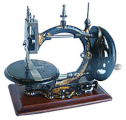
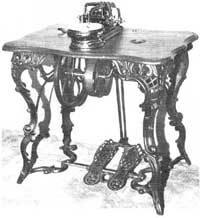
A report on the Luton gathering, centered on Carol Head's Whight and Mann display and comparisons among Alberta, Excelsior, Columbia, Prima Donna, Wanzer, Hurtu, So-All, and other unusual machines and stands.
Forsdyke Condition Chart
Graham Forsdyke's ten-point scale for describing a machine's cosmetic condition, from factory-fresh examples to parts-only machines, while requiring broken or missing mechanical parts to be stated separately.
Auction News
Reports from Christie's and the Luton sale record condition grades and hammer prices for Bradbury, A. W. Taylor, Weir, Willcox and Gibbs, Moldacot, Dorman, Grover and Baker, and other collectible machines.
Excelsior Patent Data
A contemporary patent abstract and diagram explain George Whight's double-loop chain-stitch mechanism, including the rocking upper needle, lower looper, and hook that hold and form the interloop stitch.
Whight and Mann Story
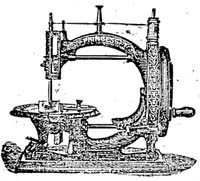
A company history tracing Whight and Mann from Gipping Works in 1859 through the Excelsior, Alberta, Princess, Prima Donna, and other models, followed by the George Whight era and German-made imports.
SMCS News No. 2, 1985 cover

Issue 2 ·

SMCS News No. 2

Two Lady Owners
The provenance of a Little Wanzer owned from 1890 by K. M. Robinson, who began work at fifteen as a sleeve-hand sewing black material by gaslight for twelve hours a day.
So-All, Inc. Researched
Company records identify the So-All Lockstitch Sewing Machine Company, its patents and capitalization, the bankruptcy associated with Wilmot Holland, and the firm's dissolution in 1896 after a very short possible production life.
ABC Made Easy
Kim Kelly describes cleaning and restoring a badly neglected ABC machine, touching in damaged black paint, reconstructing its gold and floral decoration, and identifying it through an 1869 advertisement.
Steam Machines
Four period inventions illustrate attempts to power sewing machines with miniature steam engines, a paraffin-heated engine, and a water motor from the 1870s through 1913.
Go-Withs
A guide to collecting the material surrounding sewing machines, including cases, needle containers, accessories, instruction books, advertisements, trade literature, and other display pieces.
Playtime
An introduction to toy sewing-machine collecting, the uncertain boundary between toys and small portable machines, and the need for patent records, instructions, advertisements, and identification information.
Auction News
A German toy-machine sale and a Christie's auction are reviewed, including prices for Vulcan and cast-iron toys and the £1,100 sale of a turned-leg Grover and Baker No. 14.
Anchored At Last and Shape-up
A rare Anchor machine is compared with Royal Sewing Machine Company designs, followed by an examination of its interchangeable Challenge mechanism and the question of why Royal produced the alternate frame.
Cash Discount
Frister and Rossmann's licensed Willcox and Gibbs-type machine is examined as a well-finished competitor sold through drapers for cash rather than through specialist dealers offering hire purchase.
SMCS News No. 3, 1985 cover

Issue 3 ·

SMCS News No. 3

BBC Radio Locates Dorman
Norma Simms describes finding a Dorman through a BBC Radio Scotland rummage-sale programme.
Beyond the Fringe
Jesse Bethuel Lincoln’s mechanical fringer, its patents, and the hooked rotating disc used to separate fabric threads into decorative fringe.
Auction News
A Phillips sale report compares prices and condition for Challenge, Willcox and Gibbs, Weir, Moldacot, and other machines.
In at the Beginning
The first instalment of James Bolton’s recollections of joining Singer in 1852, factory work, machine improvements, and early sales.
Feedback
Readers revisit the earlier article on powered machines, distinguishing hot-air engines from steam engines and adding clockwork and water-motor examples.
Extra: Newton Wilson & Co.
Carol Head’s illustrated history of Newton Wilson, his agencies, manufacturing ventures, and sewing-machine models.
SMCS News No. 4, 1985 cover

Issue 4 ·

SMCS News No. 4

Leeds: Biggest Local Meet Yet
A report on the Leeds collectors’ meeting, its unusual machines, and the participation of local sewing-machine dealers and mechanics.
Singer Finds Family Home on the Clyde
John Hood recounts saving the Singer factory’s machines, records, manuals, and other material for the Clydebank museum collection.
Ladies’ Men
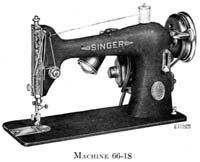
A look at manufacturers’ use of women’s names for sewing machines, contrasted with Singer’s model names and numbers.
Song of the Shirt
The Britannia company’s Tom Hood machine is examined alongside the poem and the working conditions associated with shirt making.
Auction News
The October 1985 Christie’s sale includes an early Patent Friction Taylor, with an explanation of its friction-drive arrangement.
In at the Beginning / Part 2
James Bolton recalls a competitive trial between Singer and Howe machines and his experiments with needles, thread, and leather stitching.
Extra: Here’s To You, Mr Robinson
Jennifer and Martin Gregory examine Owen Robinson’s life, inventions, and sewing-machine manufacture, including the Little Treasure.
SMCS News No. 5, 1985 cover

Issue 5 ·

SMCS News No. 5

Alternate Stitches
The Birmingham regional meeting brings together collectors and trade-fair visitors to compare unusual machines.
Gresham and Craven
A history of James Gresham and his engineering partnerships, with the Gresham, Improved Gresham, and related machines.
Tarnished Jewell
An extended critical review of Brian Jewell’s book Antique Sewing Machines, examining its information and illustrations.
Auction Report
Prices and condition reports from the December 1985 Phillips sale.
Popular Populaire
An examination of the French La Populaire’s hand and treadle operation, including its rocking wooden pedal and leather strap.
The One that Got Away
A missed opportunity to acquire an embroidery machine prompts research into pattern-copying equipment and patents.
Moldacot Matters
Patent and contemporary press material are used to investigate the Moldacot pocket machine and its commercial history.
Extra: The Royal Sewing Machine Company
Carol Head traces the Royal Sewing Machine Company, its founders, patents, and range of machines.
Extra: AGM Advertisement
A stop-press announcement of the May 11 AGM at Ironbridge Gorge Museum, Telford.
SMCS News No. 6, 1986 cover

Issue 6 ·

SMCS News No. 6

Ten-Times Better
R. Tansley’s ten-needle Robin Hood machine and the practical difficulties raised by its proposed arrangement.
Burton Bonanza
Rare and unfamiliar machines displayed at the Burton-on-Trent collectors’ meeting.
Copy Cats
Copying and competition in the sewing-machine trade of the 1860s.
Telling It How It Is
Contemporary exhibition assessments offer frank opinions of early sewing machines and their workmanship.
Arthur Clegg & Co
A biographical account of Arthur Clegg and his work as a sewing-machine manufacturer.
Top People’s Store
A Harrods catalogue provides a possible identification for an unnamed machine and illustrates the store’s sewing-machine range.
In at the Beginning / Part 3
James Bolton continues his account of Singer’s early machines, feed mechanisms, and practical improvements.
Andrew on Andrews
Jim Andrew contributes research on the Andrews machine and its inventor.
Mini Claims
A discussion of claims to the smallest sewing machine and the difficulty of comparing toys, practical machines, and different stitch types.
Easy Starting
Patented devices intended to start treadle flywheels reliably in the correct direction.
Labour Saving?
The Pope Manufacturing Company’s darning machine and Orin Stanley Hosmer’s patent are examined.
ISMACS News No. 7, 1986 cover

Issue 7 ·

ISMACS News No. 7

Beauty and the Beast
The Ironbridge AGM’s machine displays and competitions, including the Kimball and Morton Lion, and the society’s change of name to ISMACS.
Auction Reports
Reports on the May 1986 Christie’s sale and the Ironbridge society auction.
Singerling
A comparison of Singer Class 76 illustrations with the Haberling machine and its patent drawing.
In at the Beginning / Part 4
James Bolton continues his Singer recollections, including dealings with colleagues and Isaac Singer’s response to proposed improvements.
AGM Quiz
Questions about machine names, manufacturers, and sewing-machine history, with answers later in the issue.
Judkins’ Paper
An examination of C. T. Judkins’ account of early sewing-machine development.
Birth of an Empire
An account of James Gibbs’ invention and the beginnings of the Willcox and Gibbs business.
What’s His Cut
A Bradbury, Greatorex wholesale price list reveals the difference between trade and retail sewing-machine prices.
US Patent Models
The history, dispersal, and collecting value of American patent models.
Extra: Bradbury & Co.
Graham Forsdyke’s illustrated history of Bradbury, from its beginnings during the 1852 lockout through its development as a major British manufacturer.
ISMACS News No. 8, 1986 cover

Issue 8 ·

ISMACS News No. 8

Restoritis is Catching
A neglected Willcox and Gibbs treadle bought for a replacement footplate becomes a restoration project, with work on its cabinet, drawers, and ironwork.
Early Start for Yorkshire — Pitt Brothers
Carol Head examines the Pitt Brothers’ Yorkshire manufacturing history, machine range, circular-feed mechanism, and patents.
Shiver Me Castings
The opening instalment examines opposition to the Thomas and Howe patents and contemporary arguments over copying and British sewing-machine manufacture.
In at the Beginning / Part 5
James Bolton recounts taking charge of Singer’s Chicago office, selling on commission, and pressing the company for improved machines.
One Day My Prince Will Come
Patent drawings and advertisements shed light on Max Sandt’s figural toy machines, including the Princess and designs depicting people and animals.
Todd Thoughts
Graham Forsdyke compares the decoration and construction of Todd’s Champion of England machines and considers a possible American origin for their heads.
The Merritt System
An account of Singer’s overseas sales organisation and the methods its salesmen used to reach different markets.
ISMACS News No. 9, 1987 cover

Issue 9 ·

ISMACS News No. 9

Continental Visit
A report on the international gathering of sewing-machine collectors at Schweinfurt, Germany.
Auction News
Reports on the November 1986 Christie’s and Bruton Knowles sales, including a substantial private collection.
Royal Update
Two Royal Eugenie chain-stitch variants are compared through their feed mechanisms, alongside Royal’s Wheeler and Wilson-type machines.
What’s In a Name
Leigh and Crawford’s imported and branded sewing machines, their prices, advertising, and possible manufacturers.
Just My Luck
Eric de Vlieger recounts an unexpected machine discovery following a conversation with a German sewing-machine dealer.
In at the Beginning / Part 6
James Bolton describes Singer attachments, tuck-marker improvements, and the development of the New Family machine.
Bruno Naumann — a Portrait
A biographical account of Bruno Naumann, his family, and the growth of Seidel and Naumann.
Another Dorman Model Turns Up
A comparison of Dorman machines with horizontal spring-finger spool holders and a later vertical spool pin.
The Best Collection
A discussion of whether rarity, condition, knowledge, display, quantity, or value makes a great sewing-machine collection.
Shiver Me Castings
The continuation of an article on the Thomas-held Howe patent and its effect on British sewing-machine manufacture.
Singer Give-Aways
Singer’s international advertising cards for the 1893 Columbian Exposition and their appeal to collectors.

No matching issues found.