
The Union Sewing Machine Company of Richmond Virginia: The Shortest Thread in History
by Bill Grewe
Originally published in ISMACS News , issue 138. Source spelling and source dating have been retained.
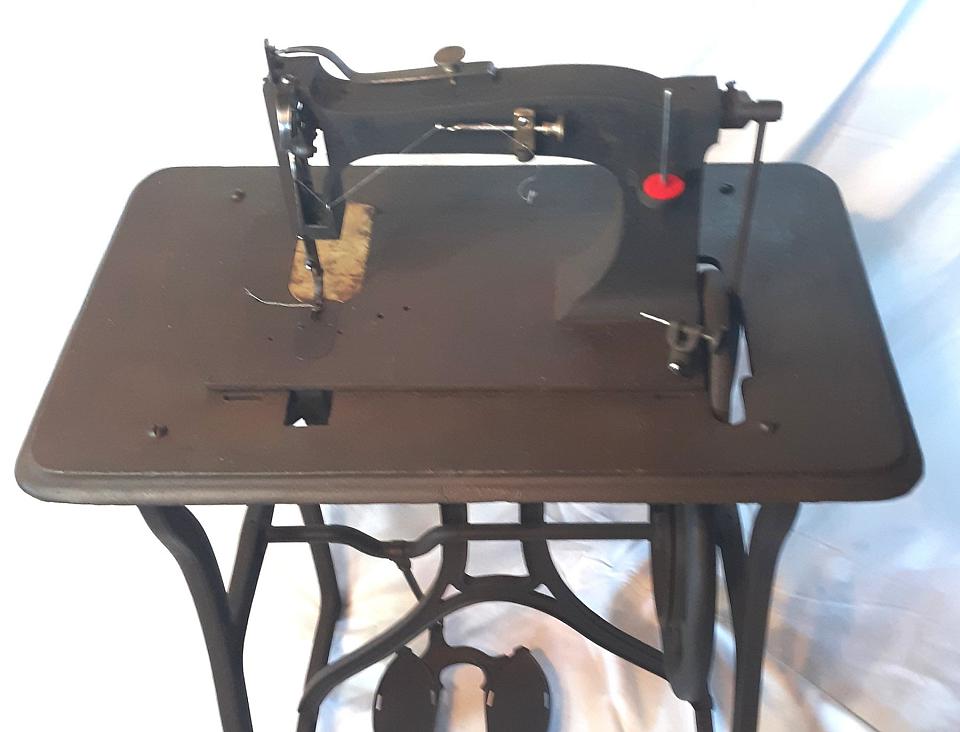
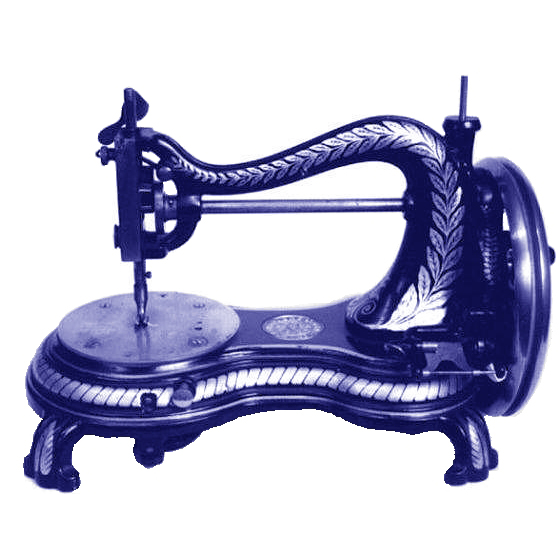
The UNION MANF’G CO sewing machine of Richmond, VA, the front
The “Union” of John H. Lester and George B. Sloat was a thriving sewing machine company in Richmond for only 2 months. Lester and Sloat referred to their businesses as “manufacturing” companies because they also made wood planing machines. Here is their story.
Lester Sewing Machine Company
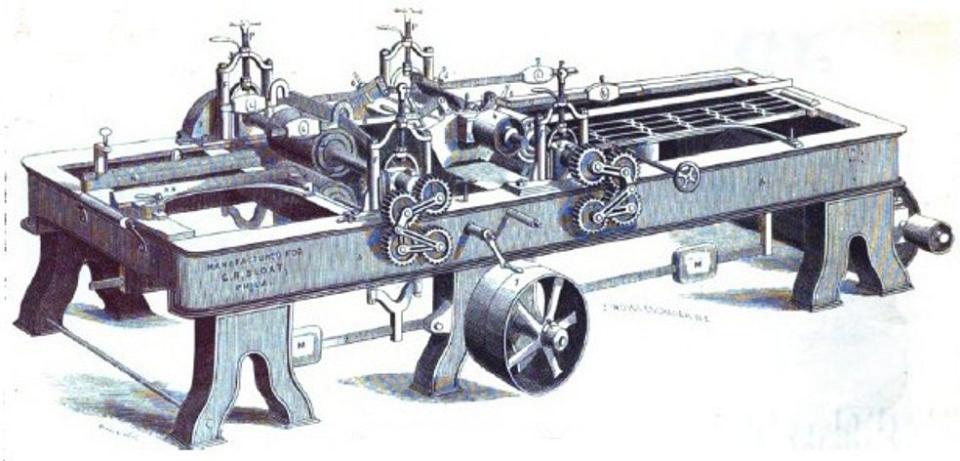
Lester planing machine from the 1856 book, The Historical Picture Gallery, Vol. V, by John R. Chapin
John Lester was a very successful businessman in New York manufacturing and selling the Woodworth wood planing machine. This planer was a big time saver, being able to plane both sides of a board, as well as cut a tongue and groove, all in one pass.
When his patent rights for the planer expired in 1856, Lester lost his competitive advantage and decided to use his machinist expertise to enter the new and expanding sewing machine business. In 1858 the sewing machine Lester began manufacturing in New York City was described in advertisements as Lester’s “Improved Shuttle Lock Stitch”. It used a boat shaped shuttle and was not much different than other machines of the time. The patents on the machine were from A. B. Wilson in 1850 and 1854, and it was licensed under Howe’s patents of 1846 and 1854. Lester had purchased a license from the “Sewing-Machine Combination” - the group formed in 1856 for Howe, Singer, Wheeler & Wilson, and Grover & Baker to pool their patents and license other companies to use them. The Combination received a fee per machine, some of which was set aside for “prosecuting infringers.”
Lester had big plans for his machine, advertising in the Richmond Dispatch paper on June 2 nd 1859:
Leslie’s [sic] Lock Stitch Shuttle
Sewing machines for Family and Manufacturers use - they make a Strong Lock Stitch that cannot be unravelled or pulled out. They stitch ALIKE both sides of the work, without forming a ridge underneath; are perfectly simple, and are equally well adapted to light or heavy work, either on Muslin, Cloth, or Leather, and is confidently offered as equal to any other machine on the market. An active and responsible party wanted to take Sole Agency for the city of Virginia. Apply with references to John H. Lester 483 Broadway, New York City.
Maybe because they got his name wrong, this was Lester’s/Leslie’s only ad in the paper in 1859. But Lester kept his eye on Richmond, and when he heard that the city was looking to invest in a sewing machine company he quickly made plans to move to more fertile territory.
The birth of the Lester Manufacturing Company in Richmond was chronicled in the Richmond Daily Dispatch on March 9, 1860 and repeated on 14 other days in March:
Southern Sewing Machines
Lester Manufacturing Company
Richmond VAThe subscribers have formed a joint stock company for the purposes of manufacturing Lester’s Celebrated Two-Thread, Lock-Stitch, Shuttle Sewing Machines which, from simplicity of construction and adaptation to all branches of needle-work, stands unrivalled, and we offer them to the public with full confidence, believing that a fair trial of the machine will satisfy all of our ability to furnish this valuable article in domestic economy, from our own factory , that will prove in every respect equal to the best furnished by Northern manufactories.
These machines are manufactured and sold under legal rights from Elias Howe Jr., Wheeler & Wilson’s Manufacturing Company, Grover & Baker’s Sewing Machine Company, and I. M. Singer & Co.
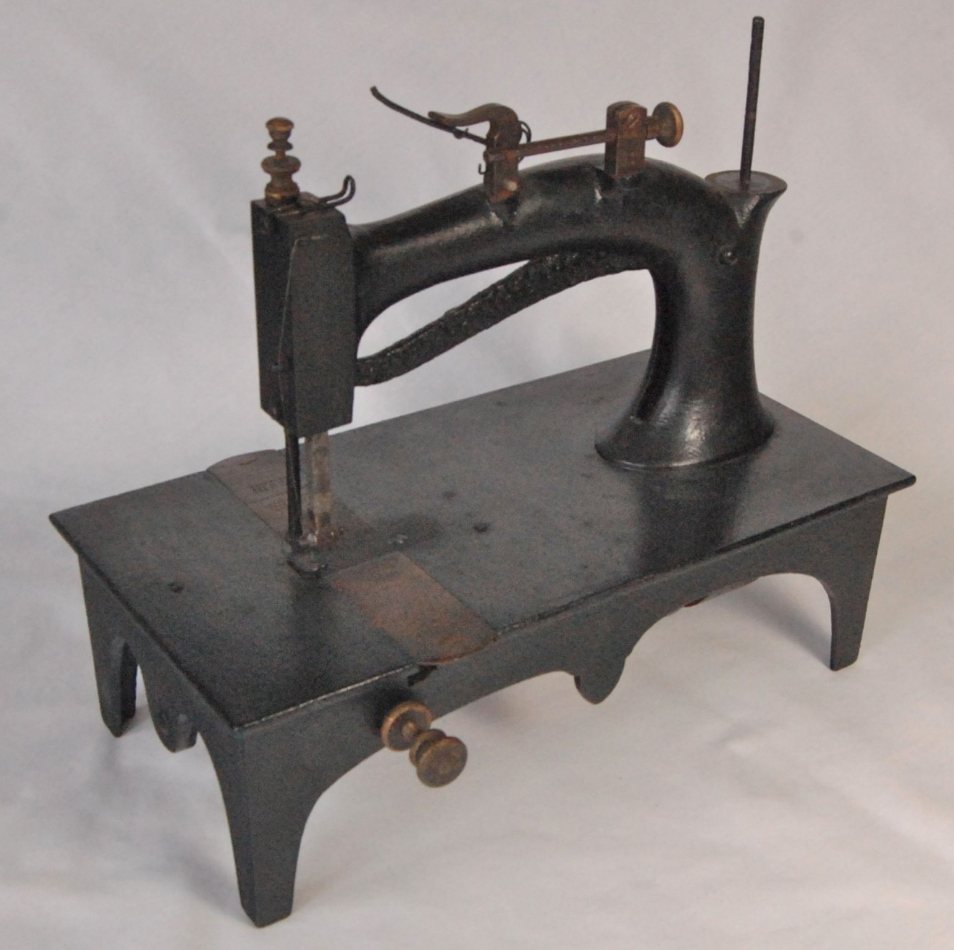
Lester's sewing machine made in Richmond, front
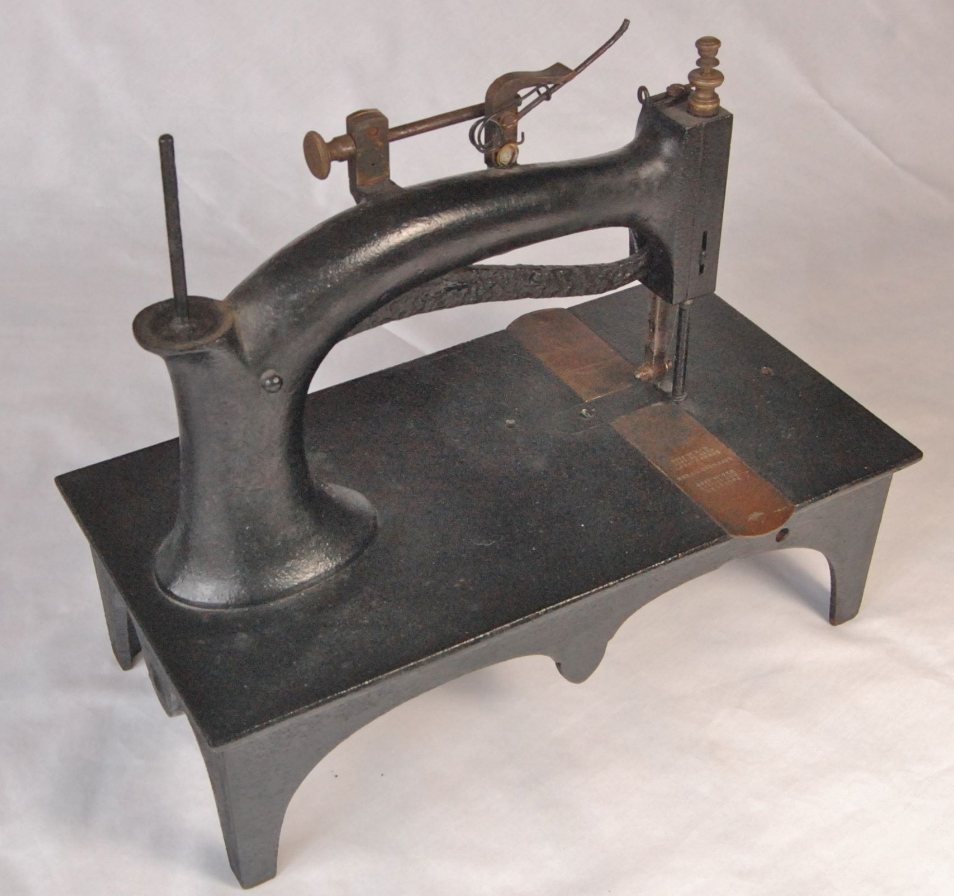
Lester's sewing machine made in Richmond, back
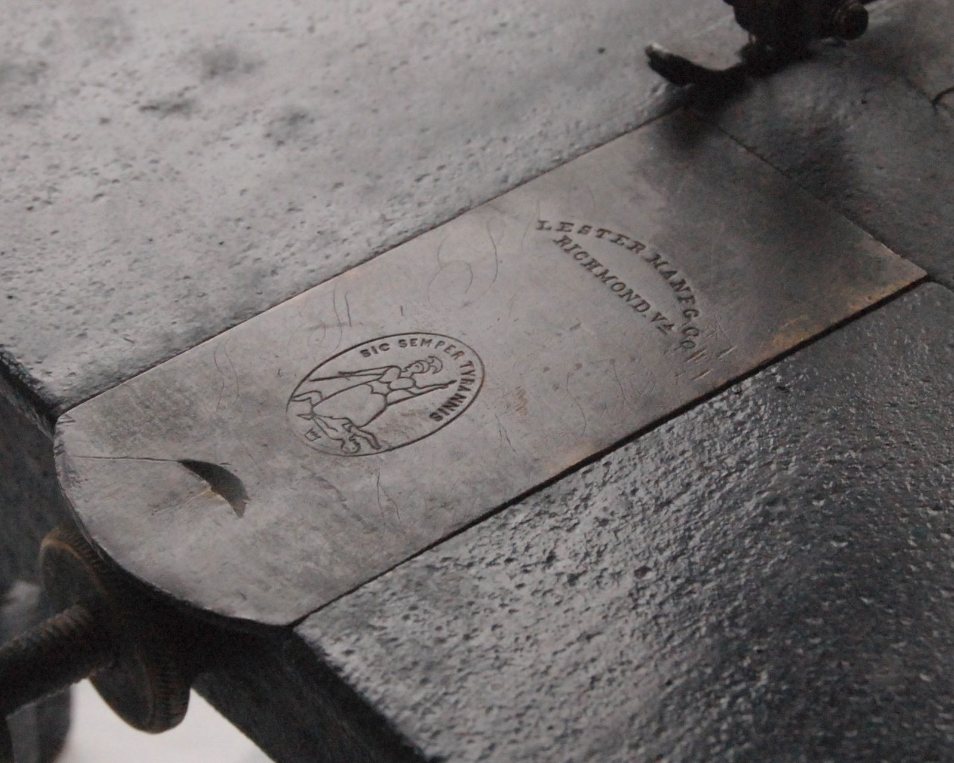
Lester's sewing machine made in Richmond, shuttle cover plate with motto of Virginia
While Lester had brought sewing machines and planers to sell in Richmond, he still needed to build a factory and returned to New York City to move his machinery, all the while continuing to support the sale of Lester sewing machines through agents in the North.
Scientific American , May 5 th , 1860 carried the following:
Lester’s Sewing Machines - For manufacturing and for family use, as good as any in the market, manufactured under legal rights from Elias Howe, Jr., Wheeler & Wilson, Grover & Baker, I. M. Singer & Co., with their combined improvements, at prices from $50 to $110. Large commissions allowed to local agents to purchase and sell again. Agents wanted throughout the country, and especially in the South, as this machine is to be manufactured expressly at Richmond VA., as soon as the buildings which are now being put up are completed. Address the Lester Manufacturing Company, Richmond, VA., or J. H. Lester, No. 57 Pearl-street, Brooklyn, N.Y.
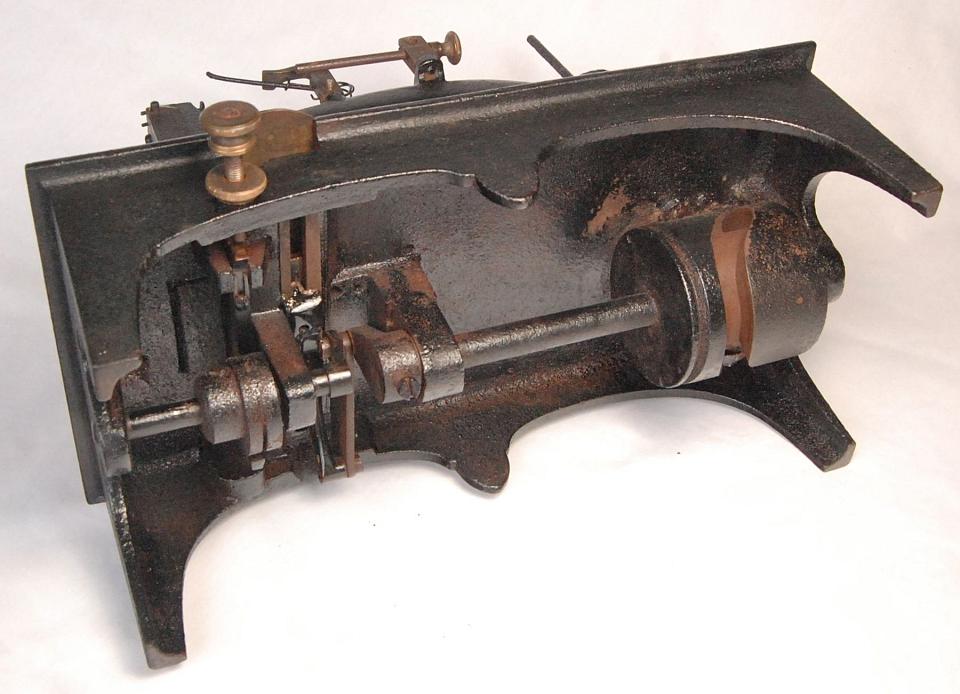
Lester's sewing machine made in Richmond, underside
Throughout the summer, the Richmond Dispatch updated the city on the progress of the factory and machinery:
July 25 th 1860 - The Lester factory on Cary Street, is nearly ready for operation, as the building is now up and the machinery being adjusted as rapidly as possible, In the course of a few weeks, at furthest, it will be in full blast, turning out sewing machines for the Southern trade.
While the factory was coming along smoothly, there were problems with the stockholders. Apparently the sewing machine manufacturing equipment Lester brought from New York was less than expected and the investors would not put up any more money. So Lester went looking for a new partner.
George B. Sloat’s Elliptic Sewing Machine Company
George Sloat also started out selling Woodworth wood planing machines, even filing a Philadelphia court case in 1851 to protect his patent rights. And also like Lester, when Sloat’s patent protection ran out after 1856 he turned to making sewing machines. Sloat acquired the rights to a September 7 th 1858 sewing machine patent from inventor Sherburne C. Blodgett, which would be the basis for his Elliptic sewing machine. The unique feature of this sewing machine was the motion of the Elliptic’s sewing hook which travelled in an elliptical motion around the stationary bobbin.
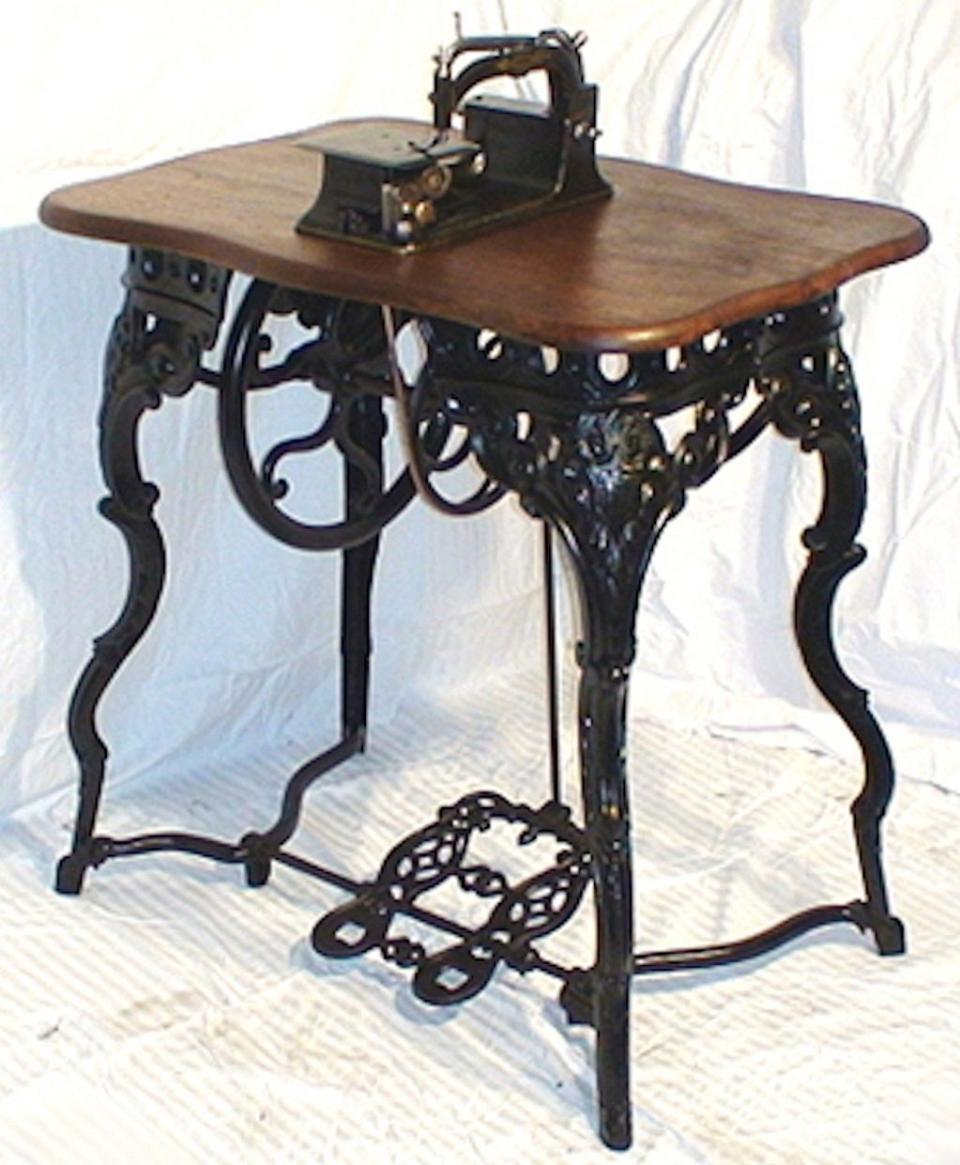
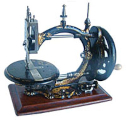
Sloat's 'Elliptic' sewing machine made in Philadelphia, on fancy stand (Courtesy of Mike Anderson)
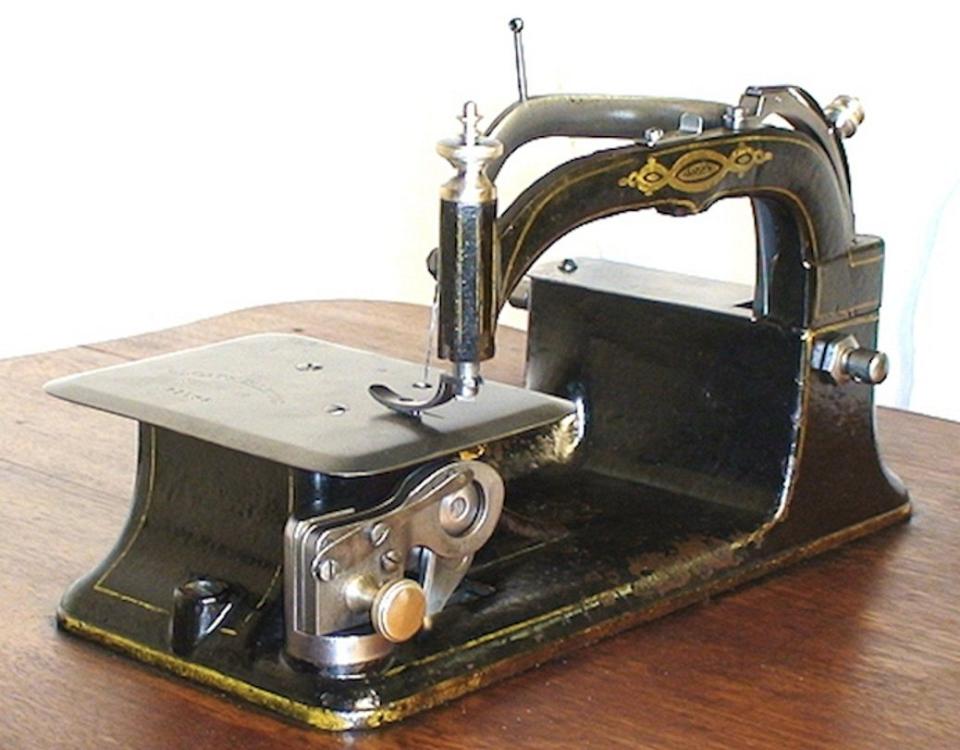
Sloat's 'Elliptic' sewing machine made in Philadelphia, machine head (Courtesy of Mike Anderson)
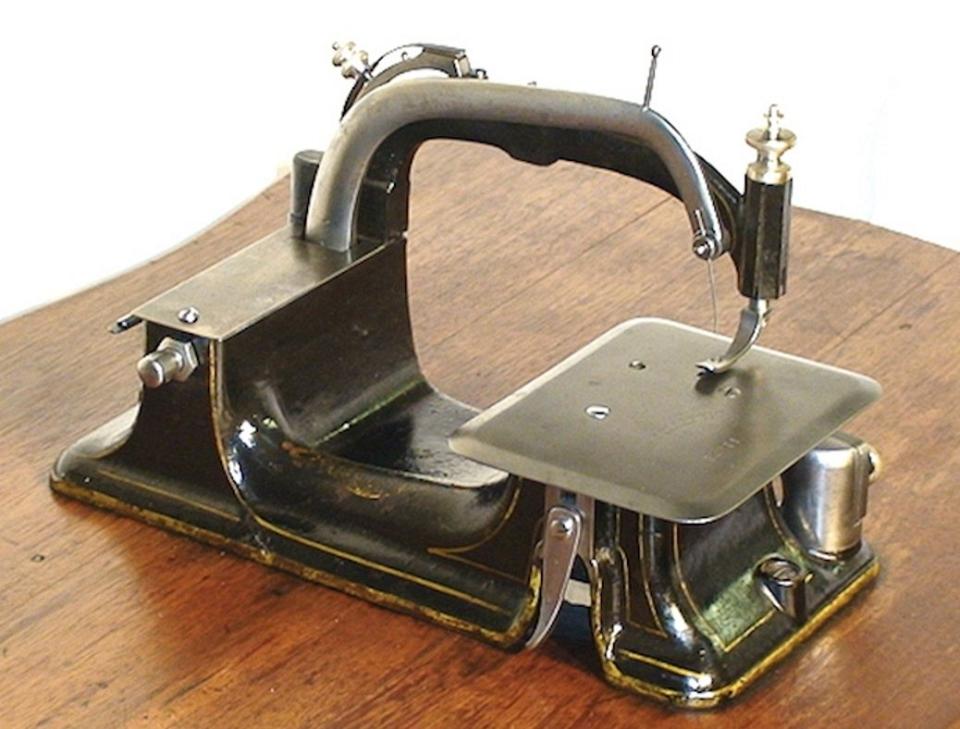
Sloat's 'Elliptic' sewing machine made in Philadelphia, machine head (Courtesy of Mike Anderson)
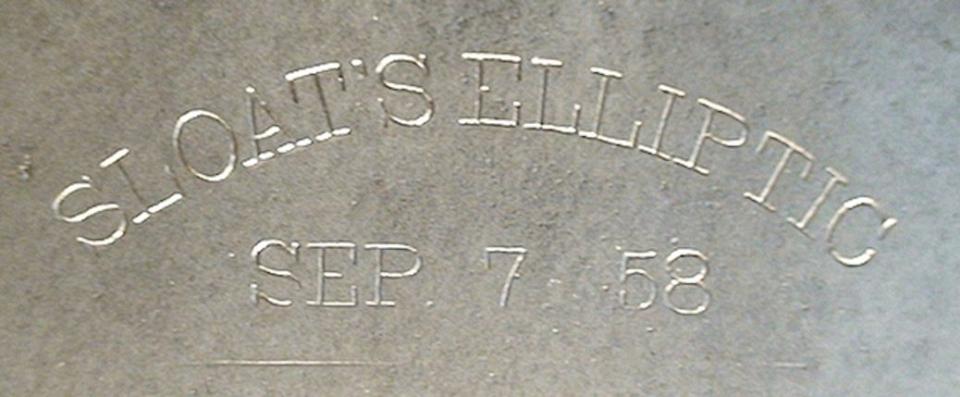
Sloat's 'Elliptic' sewing machine made in Philadelphia, stamp on cloth plate (Courtesy of Mike Anderson)
While the Blodgett patent was a key part of Sloat’s Elliptic, the other patents were controlled by the Combination. The Sewing Machine Times 1 of March 25 th 1902, described Sloat’s business strategy thus:
Sloat was a born fighter. He would not submit to what he considered the unjust claims of the Combination. He calculated the cost of royalties that he would have to pay if he acknowledged the validity of the Combination patents, and determined to spend that much in fighting them. He had handsome stores in Philadelphia, New York, and other cities and sold many machines...
Union
After his falling out with the original investors, Lester had no more advertisements in any of the Richmond papers - which, after such fanfare in the initial months, indicated that either he had no money to advertise or limited product to sell. In the fall of 1860 George Sloat showed up in Richmond.
The Sewing Machine Times , March 25 th 1902, described his arrival:
Then Sloat appeared as superintendent of the factory, bringing more machinery and control of the then popular “Sloat Elliptic” machine. He also brought skilled mechanics, including needle-makers. He brought fine office furniture, a showy delivery wagon and an aristocratic Philadelphia negro driver. This high-toned rig was the wonder of the town, and the confusion of the old trade. He also introduced selling methods that startled the old-timers, and which would not be thought slow even at this date.
The first advertisement for the combined Lester and Sloat operation appeared in the November 8 th 1860 edition of the Richmond Daily Dispatch and appeared on 22 other days in Nov/Dec:
Sloats Celebrated Elliptic Lock Stitch Sewing Machines are now manufactured by the Union Manufacturing Company , (Late Lester Manufacturing Company,) Of Richmond, Va., and are for sale at store No 231 Main Street. These Machines, of home manufacture, are warranted the best in use. Please call and examine them.
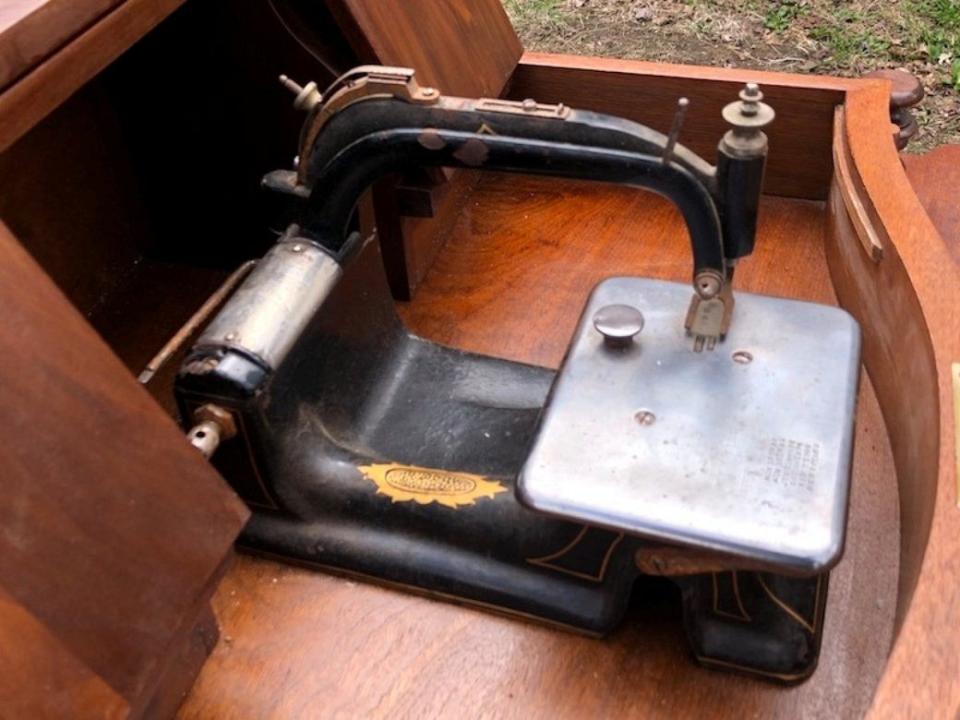
UNION MANF’G Co 'Elliptic' sold in Richmond (Courtesy of Mike Anderson)
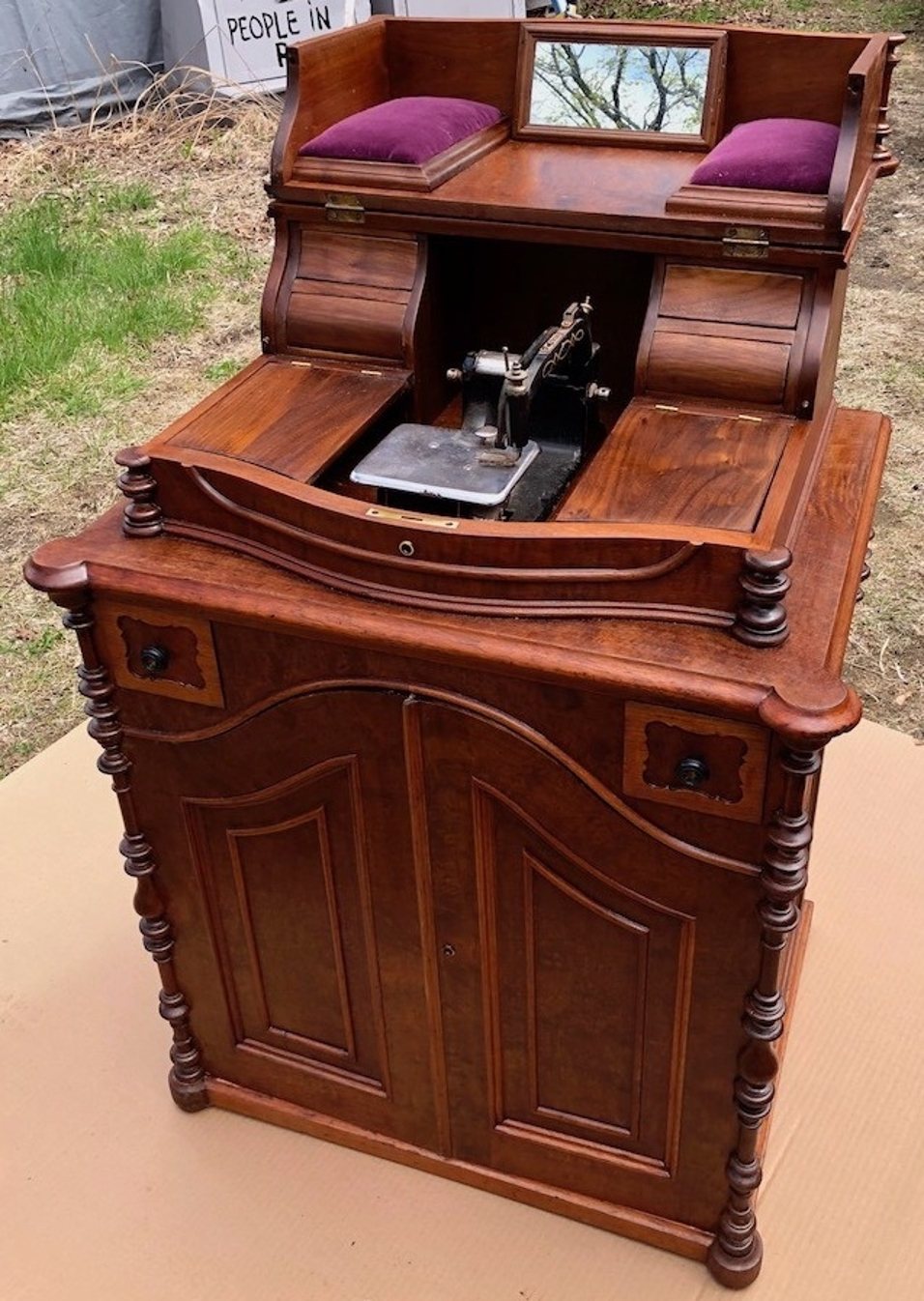
UNION MANF’G Co 'Elliptic' sold in Richmond, full case (Courtesy of Mike Anderson)
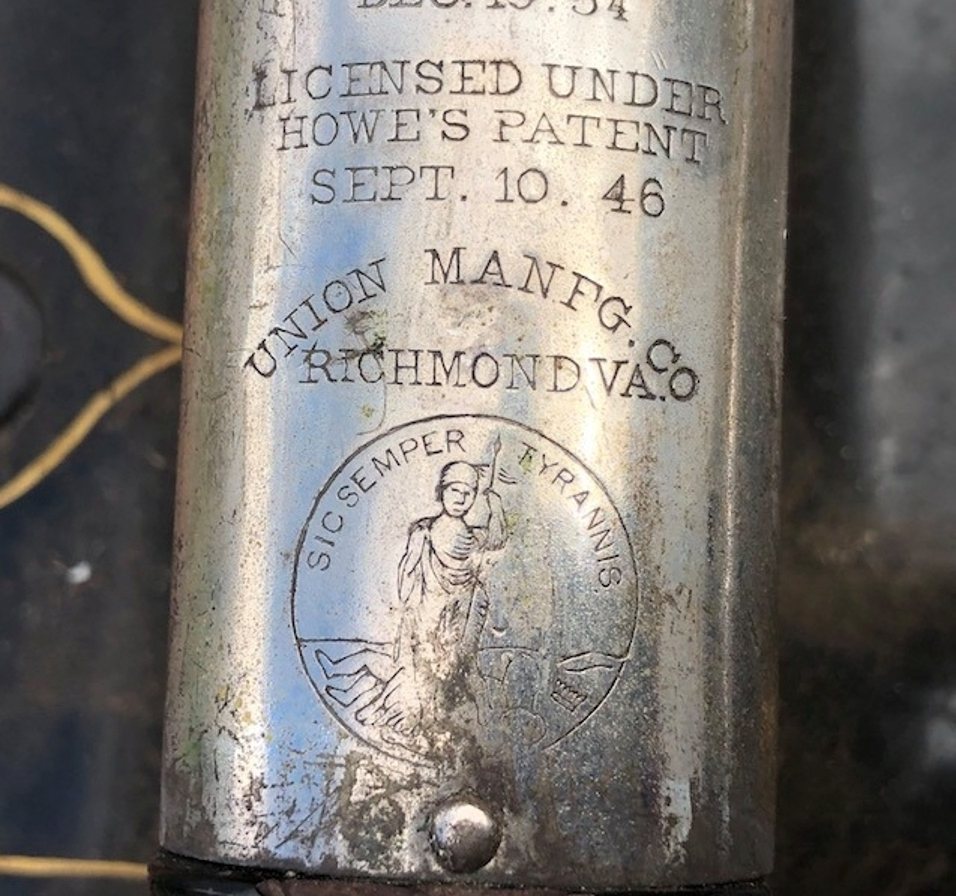
UNION MANF’G Co 'Elliptic' sold in Richmond, Union badge plate (Courtesy of Mike Anderson)
While the Union Manufacturing Company was selling both Lester’s Plantation sewing machine and Sloat’s Elliptic, it appears from the advertisements in the Richmond Daily Dispatch that Sloat handled the sewing machine sales while Lester sold the planers. Also, the Union label on the Elliptic appears to be a crude after-production attachment. It most likely reflects the sale of Elliptics that Sloat brought with him from Philadelphia, and not the manufacture of sewing machines in Richmond. After two months of regular advertisements the last Sloat advertisement appeared in the Richmond paper on December 29 th 1860. Sloat’s legal fight with the Combination had ended a few months before and the verdict had caught up with him in Richmond.
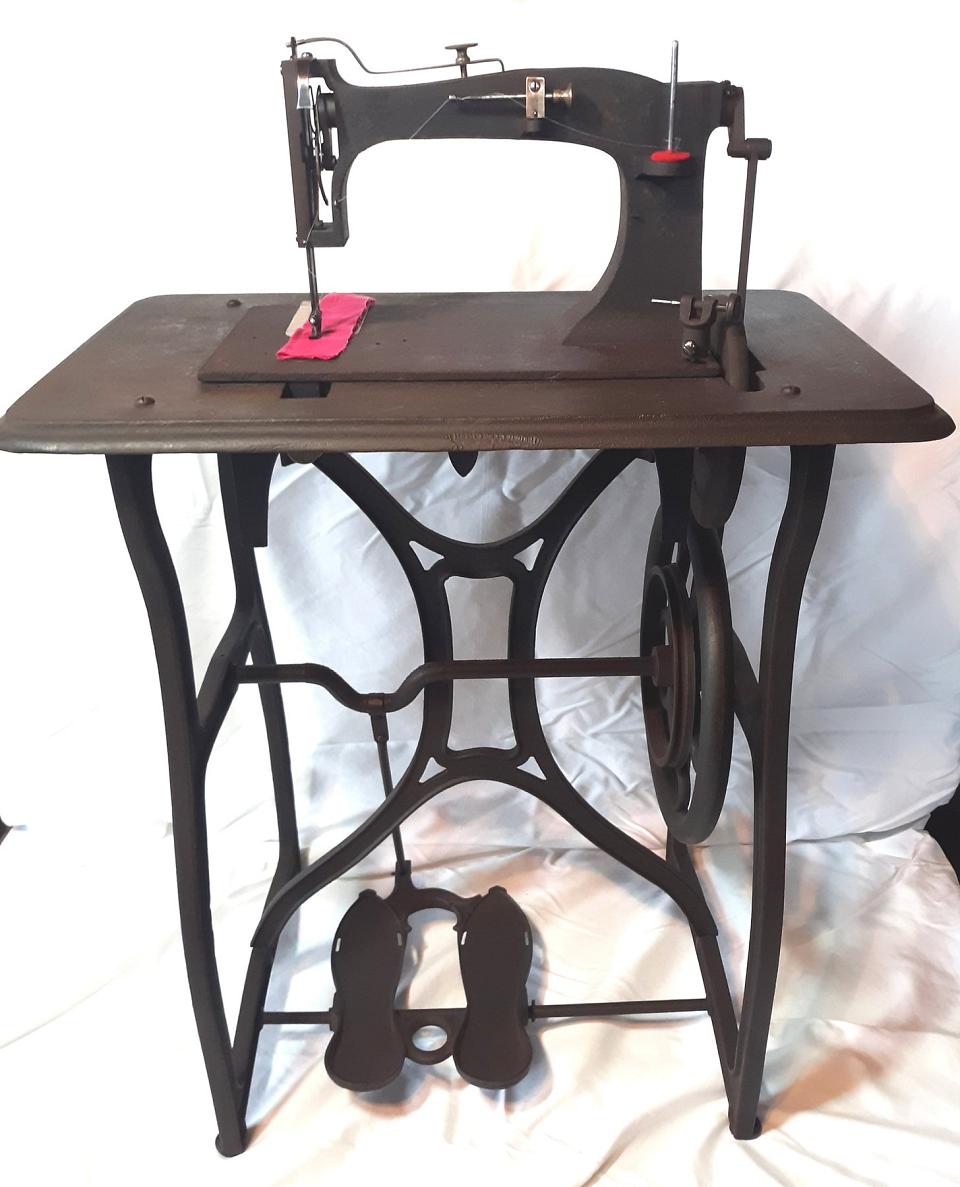
The sole known production machine of the UNION MANF’G CO of Richmond, VA
Grover & Baker Sewing Machine Co. v Sloat et al. Circuit Court, S. D. New York. 20 th August, 1860. Without further pursuing the examination in these cases, we are satisfied the plaintiffs are entitled to a decree for the infringement, and for injunctions, and that reference be made to a master to take an account.
Sloat assigned the Elliptic sewing machine rights to Nathaniel Wheeler. His arrangement called for the Wheeler & Wilson Manufacturing Company to supply him with sewing machines to sell in Richmond, but the Civil War intervened.
Disunion
The American Civil War began on April 12, 1861 when Confederate artillery fired on Fort Sumter in the harbour of Charleston, South Carolina. This put Lester in a tough spot. He had moved his family and entire business operation to Richmond, and now he was stuck in the rebel capital with a company called Union. Lester tried to be neutral, but that meant that he was distrusted in both the North and the South.
With the outbreak of war Lester’s factory stopped making sewing machines and planers - in fact no advertisements had run since the end of 1860. Most of Sloat’s workers returned north. Lester tried to sell the business, but the only offers were in Confederate money. Lester felt he had no choice but to stay in Richmond.
Sloat also stayed in Richmond and oversaw the Union Manufacturing Company machinery being put to use making pistols and upgrading flintlock rifles into carbines. Sloat also had time to tinker, submitting two patents to the Richmond patent office. 2
CS-3 Sewing Machine Stand, Design
(August 5 th 1861)CS-4 Work Box for Sewing Machine, Design
(August 5 th 1861)
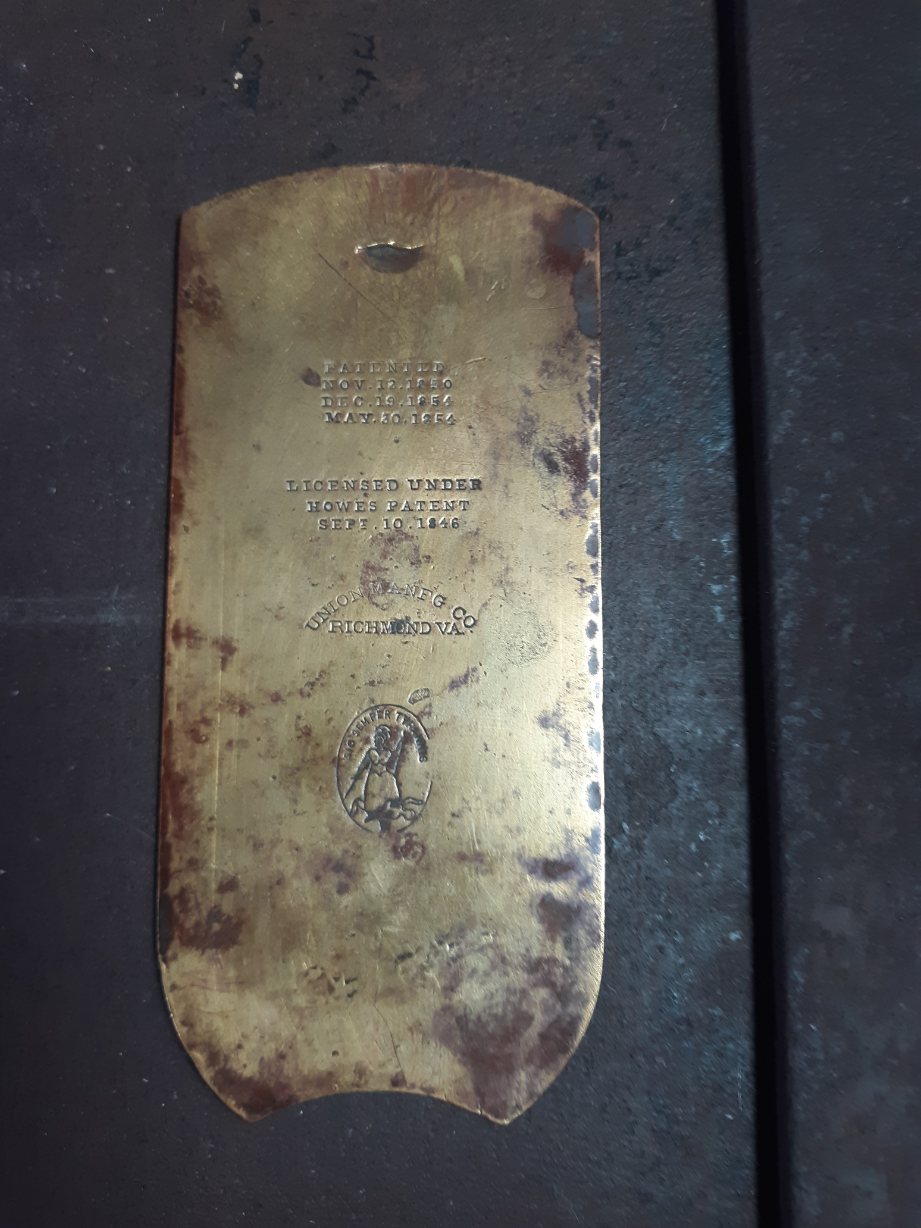
The UNION MANF’G CO sewing machine of Richmond, VA: shuttle cover plate
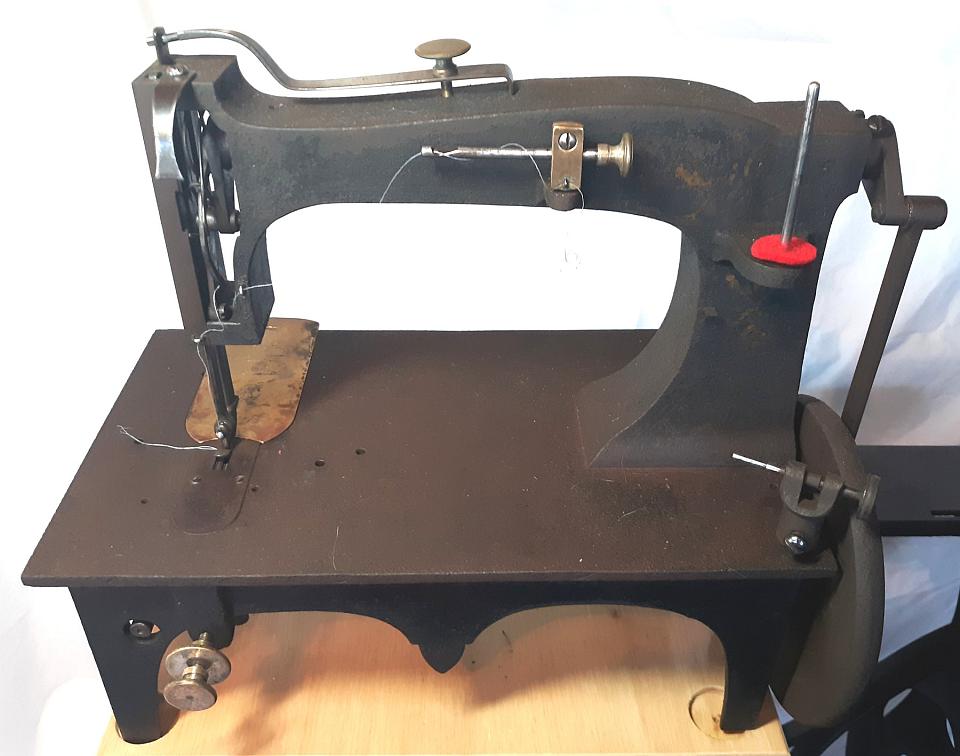
The UNION MANF’G CO sewing machine of Richmond, VA: the machine removed from the table
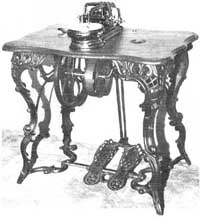
This all metal treadle stand and machine may be the only Union sewing machine jointly made by Lester and Sloat in Richmond. It has the treadle foot pedal of the Elliptic and W&W machines, with the thread guide, front knob, and slide plate stamp of the Lester. 3 The all metal treadle design may have been Sloat’s CS-3 and/or CS-4 patent design, but no patent description, drawing or model survived the war.
The surviving machine is a large heavy machine which could have been useful for making uniforms. It is unusual in having an oscillating shuttle with a short large diameter bobbin just like a modern machine. The shuttle has a beak to pick up the loop of thread rather like the Singer’s first attempt at the Improved Family of twenty years later. (MG)
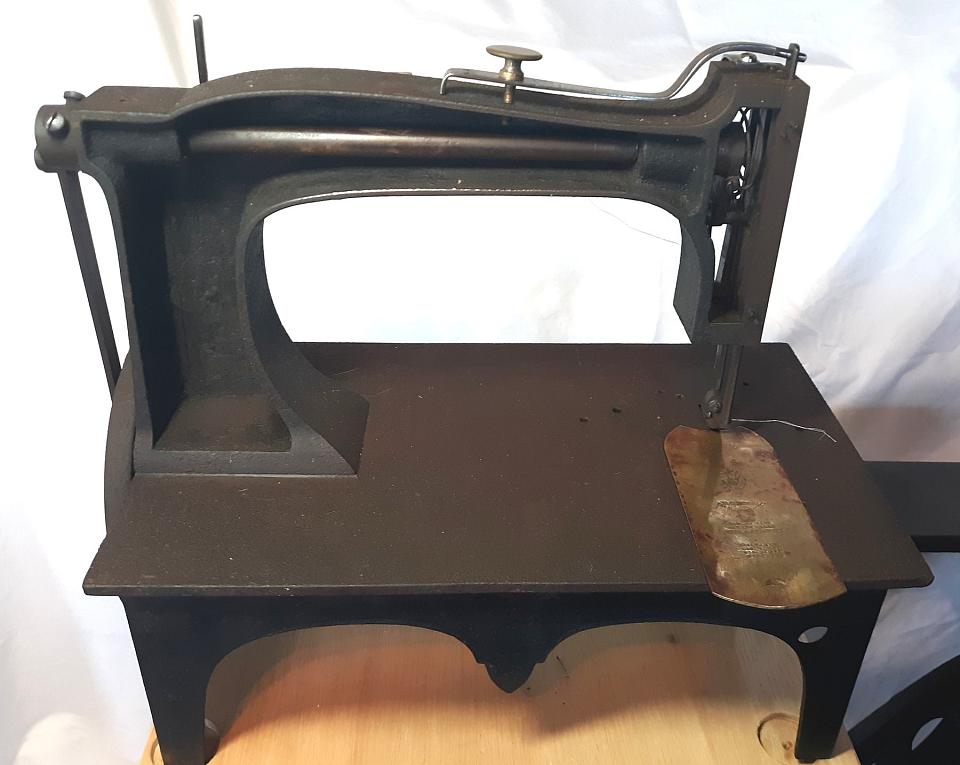
The UNION MANF’G CO sewing machine of Richmond, VA: the back of the machine
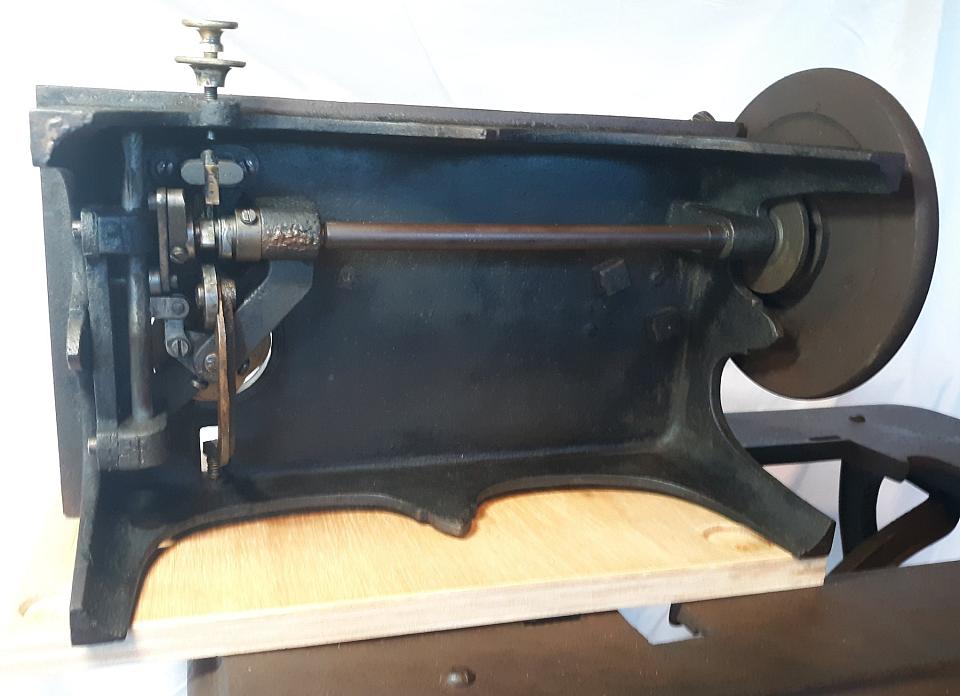
The UNION MANF’G CO sewing machine of Richmond, VA: the underside of the machine
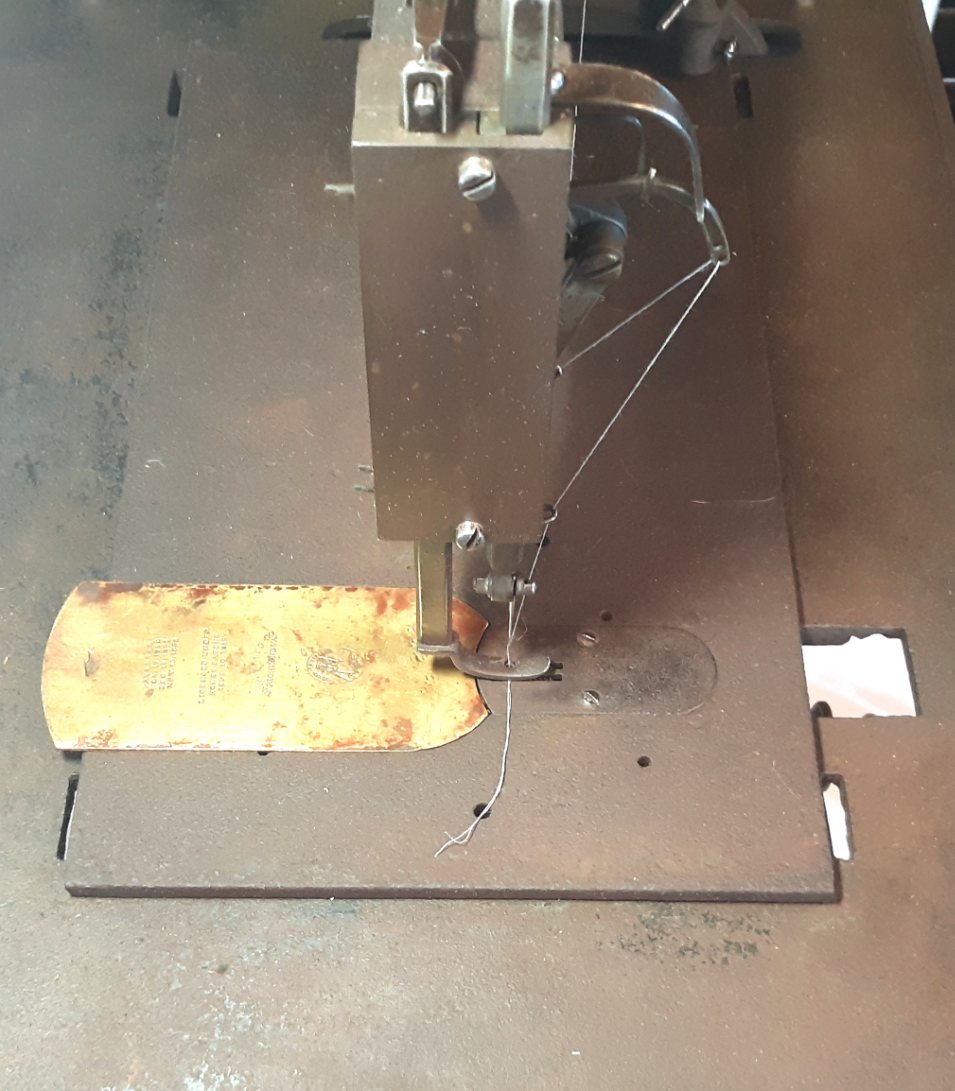
The UNION MANF’G CO sewing machine of Richmond, VA: the head of the arm showing the take-up assembly
Sloat stayed in Richmond throughout the war. Lester naively returned North in 1864, was court-martialled, and sentenced to 10 years at hard labour. His detailed story was told in the June 2014 issue of ISMACS News 115. One of Lester’s many letters from prison to his wife Ursula talked about Sloat staying in Richmond under siege: 4
Perhaps it is an evil that good may come of I am sure I prefer my position to what you inform me G. B. Sloat is and I have no doubt Sarah would prefer yours to hers. (Lester to wife Ursula January 6 th 1865)
Lester was pardoned by President Lincoln in April 1865 5 and returned to Brooklyn NY. Sloat stayed in Richmond after the war and opened a machinist shop. He would later return to his hometown of Philadelphia.
After the war, both Lester and Sloat continued their inventive ways. Sloat submitted a US Patent in 1888 for a bath tub seat. Lester had a patent for Improved Oil for Lubricating Machinery in 1866, Improvement in Sewing Machines in 1871 (the improvement was for Lenher’s patent of 1866), and one for Improvement in Milk Cans in 1877.
Neither Sloat nor Lester returned to the sewing machine business.
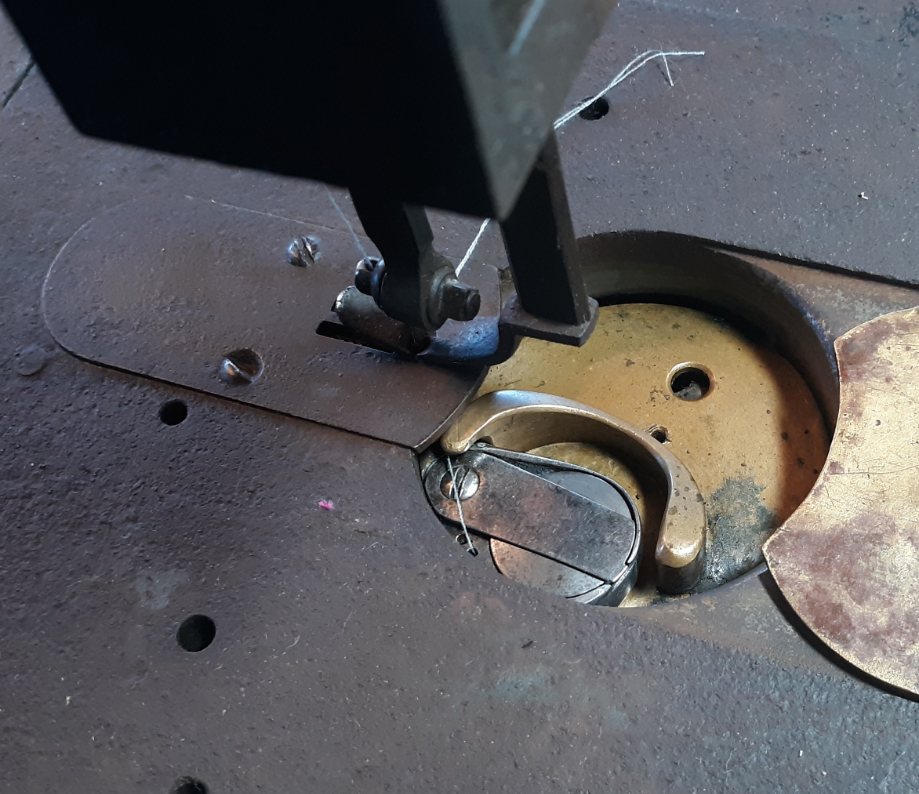
The UNION MANF’G CO sewing machine of Richmond, VA: the oscillating shuttle in its race
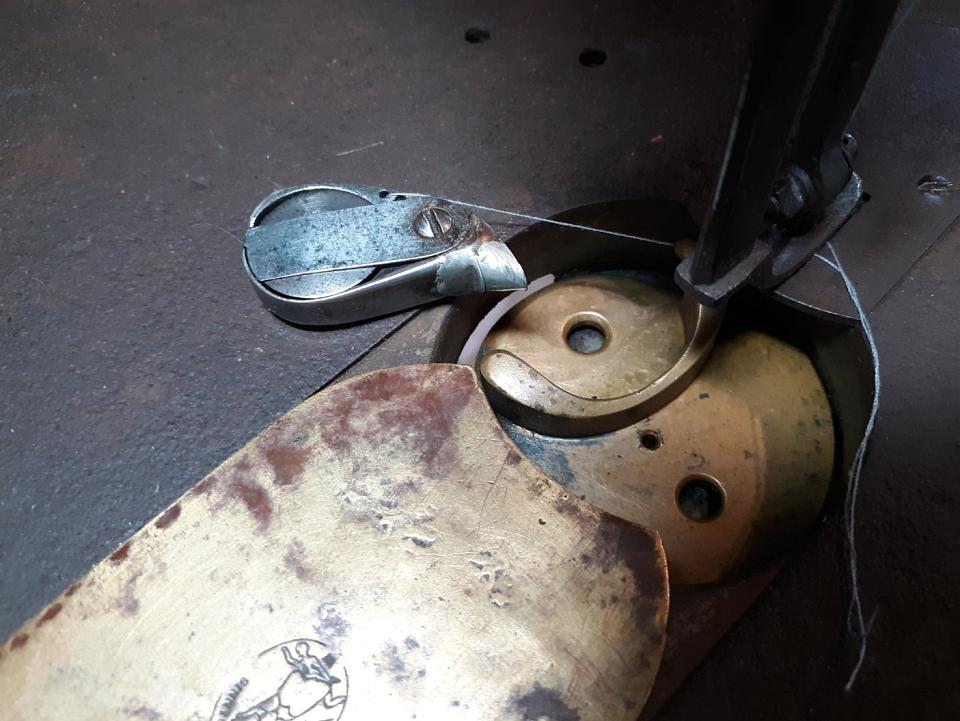
The UNION MANF’G CO sewing machine of Richmond, VA: the oscillating shuttle with its short fat bobbin
Epilogue
There are a number of possible Lester/Sloat/Union sewing machine variations:
- Lester Sewing Machine made in Brooklyn NY - 1858 to the Summer 1860 (known example)
- Lester Sewing Machine made in Richmond VA - Summer 1860-Spring 1861 - with a slide plate that says Richmond - (known examples)
- Lester “Plantation” Sewing Machine made by the Union Sewing Machine Company in Richmond VA - Nov 1860-Spring 1861 - would have a Union slide plate. (no known examples)
- Sloat Elliptic sewing machine made in Philadelphia 1858-1860. Many known examples. Considering that he was introducing a new/unique type of sewing machine, and fighting the Combination lawsuit, Sloat sold a number of machines over a short period of time. Apparently a good amount of that success was due to his salesmanship.
- Sloat Elliptic sewing machine made in Philadelphia, badged Union Sewing Machine Company, and sold in Richmond - Nov-Dec 1860. (known example)
- Sloat Elliptic sewing machine made in Richmond VA - Nov 1860-Dec 1960 - would have been marked with “Union Manufacturing Company” on the needle plate. (no known examples - and given the short period of time he was selling machines in Richmond it is likely Sloat never manufactured a sewing machine in Lester’s factory.)
- Lester and Sloat Union Sewing Machine Company sewing machine - Nov 1860 to Spring 1861 - with slide plate that says “Union Manufacturing Company” - (known example). I could not find any evidence that Lester or Sloat attempted to revive the Union Sewing Machine Company or further market this machine after the war.
References
- The Sewing Machine Times , New York, March 25, 1902 - a trade paper “Devoted to the Sewing Machine and Allied Interests” - was published twice a month from 1882-1924 with 16 pages of sewing machine ads, innovations, and history.
- The Confederate States of America (CSA) Patent Office was opened in Richmond Virginia on March 11 th 1861 and closed permanently on May 5 th 1865. 266 patents were issued during that time. By comparison, the US patent office issued 16,051 patents. The CSA models and records were lost during a fire at the end of the war. A record of the patent numbers and titles was pieced together from various sources outside of Richmond.
- Without a manual, recommended needle, or thread path, Suzanne Revell, a whiz on getting early sewing machines to sew a stitch, was able to get The Union sewing machine treadling on. Check out this YouTube video: https://www.youtube.com/watch?v=Hvmi_a-5zc4
- In the Hartford Connecticut Historical file for John Henry Lester there are 94 letters he wrote from prison to his wife, Ursula, dated from March 5, 1864 to April 6, 1865. In addition to the letters, the Historical Society has some wooden spoons and rattles carved by Lester in prison. He sold them to officers and sent the money back to his family in Brooklyn NY.
- Ursula was able to personally plead her case to President Lincoln. He was generous with his time in answering mail and held regular open houses for private citizens - he called them his “public-opinion baths”. With the 1864 election won and the war nearly over, President Lincoln was looking for ways to help with reconciliation and reconstruction, and issued a pardon for Lester - whose last letter from prison was dated April 6 th 1865. On April 9 th 1865, at Ford’s theatre in Washington, John Wilkes Booth shot President Lincoln, leapt from the balcony, and shouted, “Sic Semper Tyrannis.”